
The most important steps are to get the boiler serviced before the cold weather arrives, order oil early so you’re not caught short when prices or delivery times rise, check the tank and oil line for damage, and protect exposed pipework from frost. Then run the heating for a short while before you really need it, so any faults show up early.
A little preparation in September or October saves a lot of hassle when the first frost hits. If your boiler is due a check, you can book an oil boiler service with us.
1. Book the annual service early
An oil boiler service replaces the nozzle, changes or cleans the filters, cleans soot from the heat exchanger and sets up the burner for clean, efficient combustion. It’s the single best way to avoid a winter breakdown.
Booking in late summer or early autumn avoids the rush, and any repairs can be done before the heating is on every day.
2. Check your oil level and order in good time
Don’t let the tank run low going into winter. As well as the obvious risk of running out, a low tank can draw sludge from the bottom into the supply line and filters.
- Check the gauge or sight tube
- Order before demand peaks in cold snaps, when delivery times can stretch
- If you run out, the system may need bleeding before the boiler will fire again
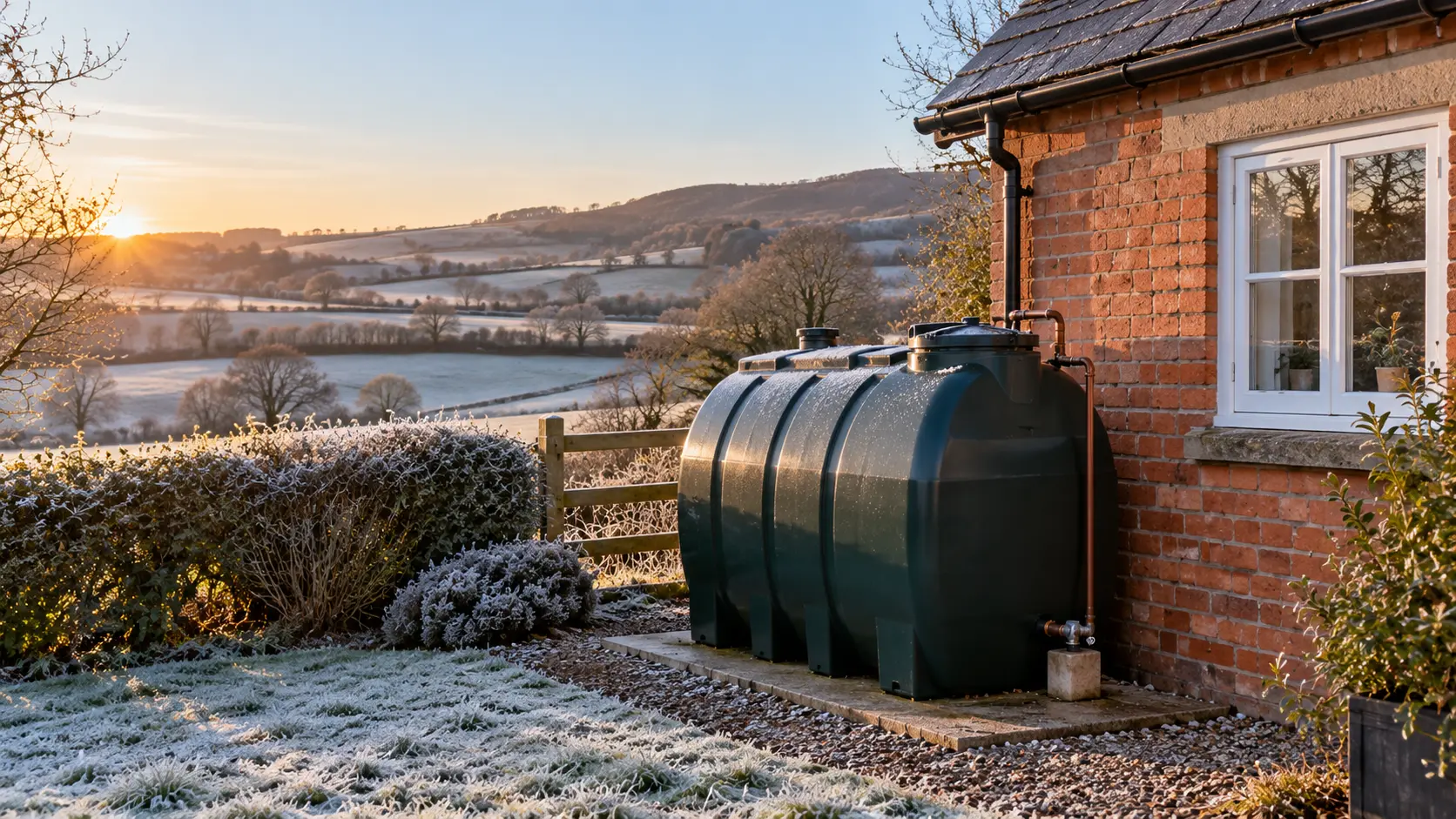
3. Inspect the oil tank
Take a walk round the tank and look for:
- Cracks, splits or bulges in plastic tanks
- Rust, weeping seams or corrosion on steel tanks
- Water collected in the bund
- A cracked or unstable base
- Overgrown plants around the tank or pipework
A damaged tank is a spill risk, which can be expensive to clean up and harmful to the environment. Report any concerns to an OFTEC registered technician.
4. Protect the oil line and pipework from frost
Heating oil (kerosene) is designed to cope with UK winters, but very cold weather can still cause issues in exposed oil lines, and condensate pipes on condensing oil boilers can freeze. Insulating exposed pipework helps, as does keeping the boiler area free from draughts.
5. Test the heating before you need it
Run the heating for a short spell in early autumn. Check:
- The boiler fires and runs without locking out
- All radiators heat evenly from top to bottom
- The hot water gets hot
- There are no unusual noises or smells
If any radiator is cold at the top, bleed it. If it’s cold at the bottom, sludge may be building up and a power flush might help.
6. Know what to do if it locks out
If the boiler locks out:
- Check there’s oil in the tank and the supply valve is open
- Check the thermostat and timer settings
- Press the reset button once, following the manufacturer’s instructions
If it locks out again, don’t keep resetting it. Repeated resets can flood the combustion chamber with oil. Call a technician.
Oil heating in rural Herefordshire
Across Herefordshire, many homes outside Hereford and the market towns of Leominster, Ledbury, Bromyard and Ross-on-Wye rely on oil. Longer delivery routes to rural properties are one more reason to keep an eye on your oil level and order early.
If your oil boiler is old and struggling, it may be time to look at a new boiler.
Frequently asked questions
How much oil should I have going into winter?
Enough to last until you can comfortably arrange the next delivery. Many households order to fill the tank in autumn, but the right amount depends on tank size, usage and budget.
Can heating oil freeze?
Kerosene is designed not to freeze in normal UK winters, but in severe cold it can thicken or form wax in exposed lines. Insulating the oil line reduces the risk.
Why does my oil boiler keep locking out?
Common causes include a blocked filter or nozzle, air in the supply line, low oil or a faulty component. A service usually resolves most of these.
Want your oil boiler ready before the cold hits?
If it needs a service or you’ve noticed anything odd, give us a ring on 07742 183 564 or send us a message and we’ll come and sort it.