
On a still, clear night in the Herefordshire countryside the temperature can drop well below freezing, and pipes in lofts, outbuildings and outside walls are the first to suffer. The best protection is simple: lag exposed pipes, keep the heating ticking over in cold spells, know where your stopcock is and fix dripping taps before the frost arrives. If your heating isn’t reliable going into winter, our service and repairs team can check it over first.
Where pipes are most at risk
Water expands as it freezes. In a pipe, that can split copper or push joints apart, and you often don’t know until the ice thaws and water starts pouring out.
The pipes most likely to freeze are the ones in unheated spaces:
- Lofts, especially cold water tanks and the pipes feeding them
- Garages, utility rooms and outbuildings
- Pipes running along outside walls or under suspended floors
- Outside taps
- Pipes in holiday lets, annexes and second homes left empty
- Condensate pipes running outside from condensing boilers
Older farmhouses and cottages often have pipework running through cold, draughty spaces that has been altered over the years, so it’s worth having a proper look.
Lag what’s exposed
Foam pipe lagging is cheap, easy to fit and available from any DIY shop. Concentrate on:
- Pipes in the loft, but don’t lag the area directly under the tank if there’s no insulation below it, as heat rising from the house helps protect it
- The cold water tank itself, with a proper tank jacket or insulated lid
- Pipes in garages and outbuildings
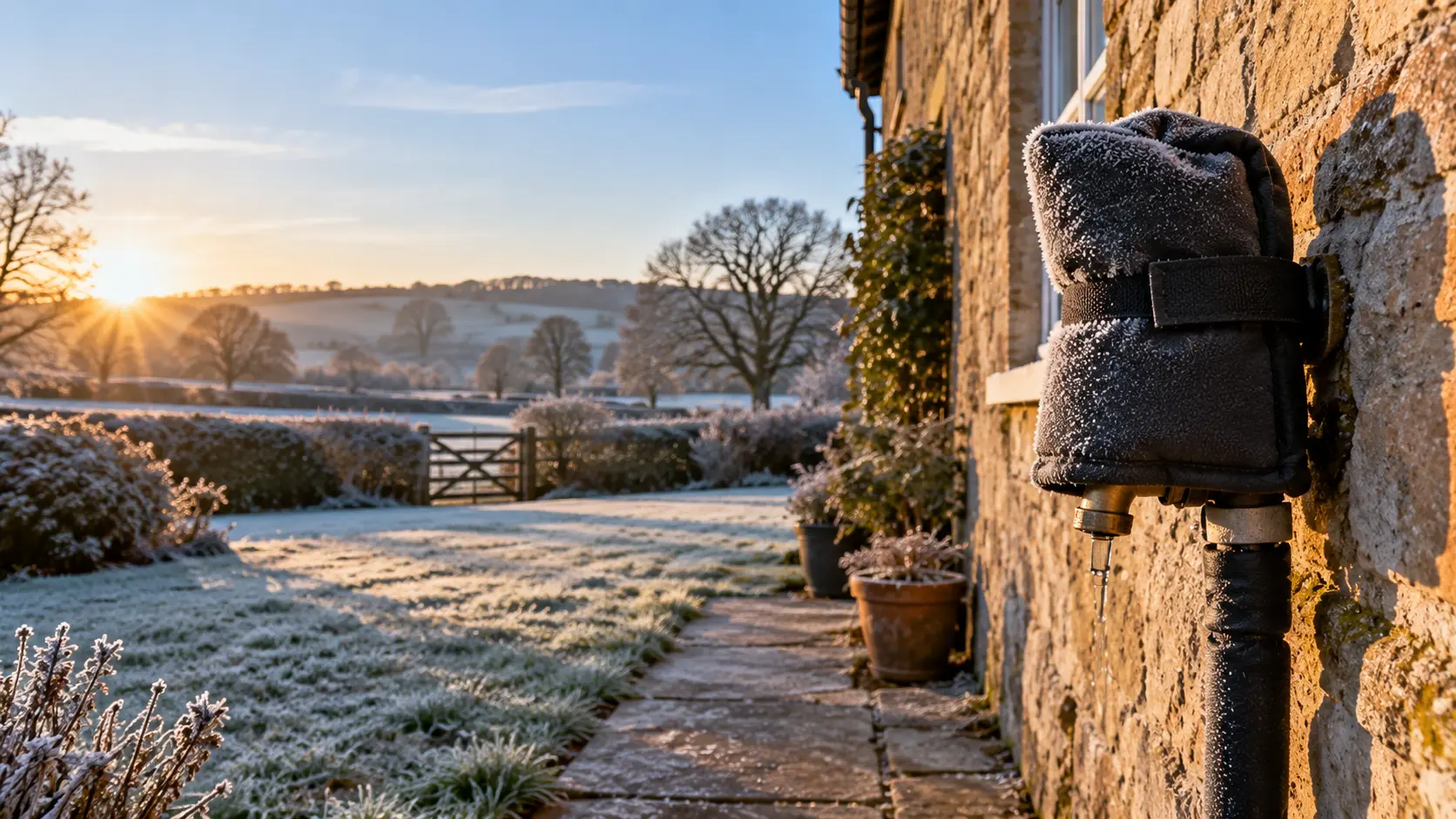
- Outside taps, with an insulated cover, or better still isolate and drain them for the winter
Make sure joints and bends are covered too. Gaps in lagging are where pipes tend to freeze first.
Use your heating to protect the house
In a cold spell, keeping the heating on at a low temperature is far cheaper than repairing a burst pipe. Most boilers and programmers have a frost setting that brings the heating on when the temperature falls very low.
If you’re going away, leave the heating on low or on frost protection rather than switching it off altogether. Opening the loft hatch during very cold weather lets a little warm air into the roof space.
Know where your stopcock is
The stopcock (internal stop tap) shuts off the mains water to the house. It’s usually under the kitchen sink, but in older and rural properties it can be in a cellar, utility room or under the stairs. Find it now, check it turns and make sure everyone in the house knows where it is.
If a pipe freezes
If a tap produces nothing, or just a trickle, on a frosty morning, a pipe has probably frozen.
- Turn off the water at the stopcock.
- Open the tap the pipe feeds, so water can escape as it thaws.
- Warm the pipe gently with a hot water bottle, a hairdryer on a low setting or warm cloths, starting at the end nearest the tap.
- Never use a blowtorch or naked flame.
- Check carefully for splits or drips as the pipe thaws.
If a pipe bursts
Turn the water off at the stopcock straight away. If water is near electrics, switch off the electricity at the consumer unit if it’s safe to reach. Open the cold taps to drain the system and catch what you can. Then give us a call on 07742 183 564.
Frost in rural Herefordshire
Much of Herefordshire is open countryside, with homes in villages and hamlets that sit lower in river valleys or on exposed hillsides. Frost pockets are common, and homes outside Hereford, Leominster, Ledbury and Ross-on-Wye can be noticeably colder overnight than the towns. If you’re on oil heating, it’s also worth keeping an eye on the oil line and condensate pipe, as our guide on what to do if your boiler breaks down explains.
Frequently asked questions
What temperature do pipes freeze at?
Water freezes at 0°C, but pipes inside a heated home rarely freeze until it’s well below that outside. Pipes in lofts, garages and outside walls are at risk much sooner, especially during a long cold spell or on clear, still nights when temperatures drop quickly.
Should I leave a tap dripping to stop pipes freezing?
It can help in a severe cold spell, as moving water is less likely to freeze. It isn’t a substitute for lagging and frost protection, though, and on a metered supply it adds to your water use. Lagging exposed pipes is the better long-term fix.
Does home insurance cover burst pipes?
Many policies cover damage from escaping water, but some have conditions about heating empty properties or minimum temperatures. Check your policy wording before winter, especially for holiday lets, annexes or homes that will be empty for a while, so you know what’s expected.
Worried about your pipes this winter?
If you’d like your heating and pipework checked before the frosts, give us a call on 07742 183 564 or drop us a message and we’ll come and take a look.