
If your radiators are cold at the bottom, take ages to heat up, or your boiler’s making strange noises, you may need a power flush. It’s one of the most common fixes for central heating systems that have built up sludge and debris over time, and it’s a question we’re asked a lot by homeowners across Herefordshire.
Here’s how to tell if a power flush is what your system needs, and what’s actually involved.
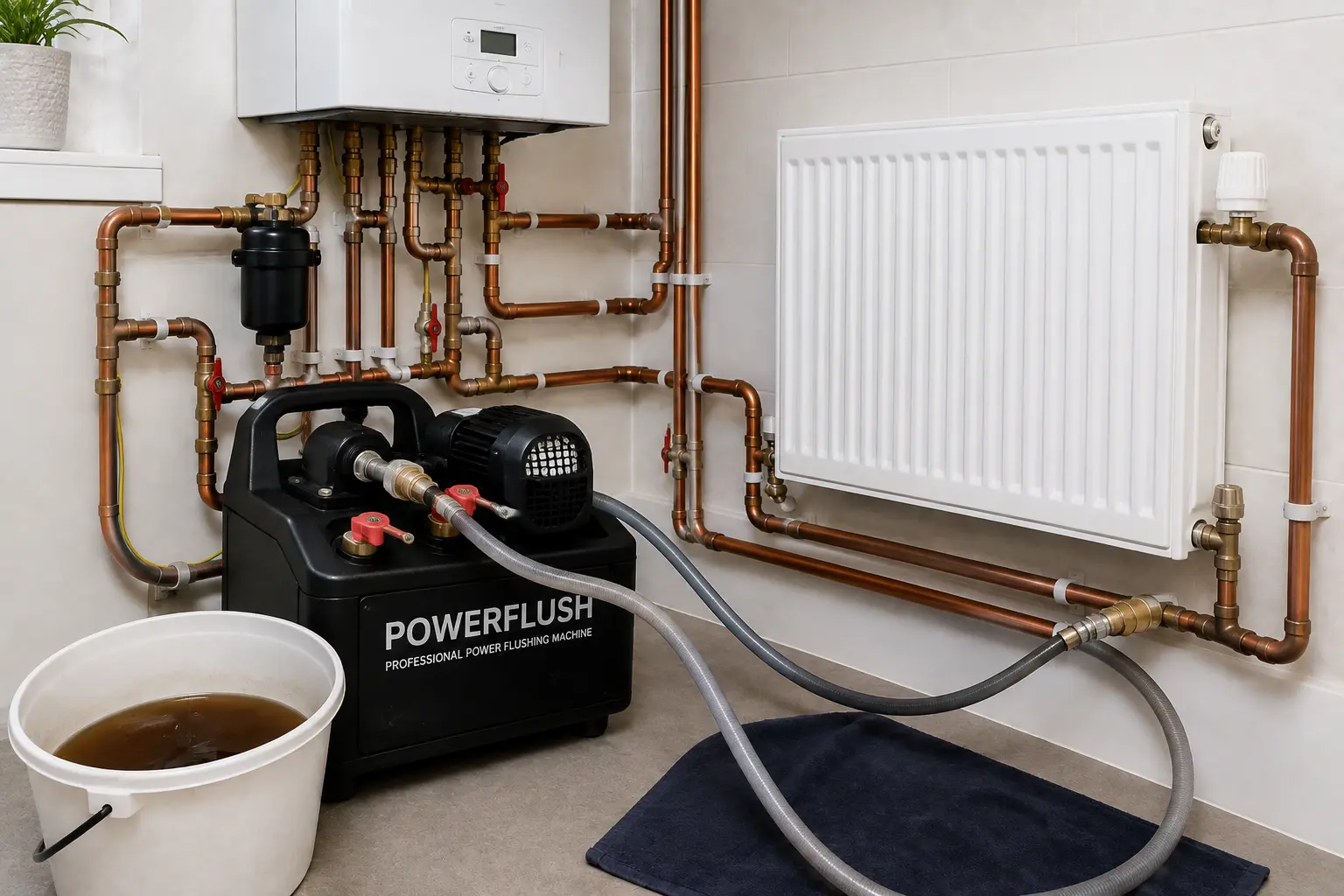
What Is a Power Flush?
A power flush is a deep clean of your central heating system. A pump forces a cleaning fluid through your radiators and pipework at high velocity, breaking down and removing rust, sludge and debris that build up inside the system over years of use.
Unlike a quick bleed of a radiator, it clears the whole system, not just one point.
Signs You Need a Power Flush
A few common warning signs point to a build-up of sludge in your heating system:
- Radiators that are cold at the bottom but warm at the top
- Some radiators heating up fine while others stay cold
- Radiators taking much longer than usual to warm up
- Banging, gurgling or “kettling” noises from the boiler
- The boiler cutting out or needing frequent resets
- Dirty, discoloured water when you bleed a radiator
- Higher heating bills without an obvious cause
If you’re noticing two or more of these, it’s worth getting your system checked.
What Happens During a Power Flush?
A qualified engineer connects a flushing pump to your heating system, then circulates a cleaning chemical through the pipework and radiators to break down sludge and scale. Each radiator is typically flushed individually to make sure debris is cleared throughout the system, not just pushed around it.
Once complete, an inhibitor is usually added to help slow future sludge build-up. The whole process generally takes the best part of a day, depending on the size of the system and how many radiators are involved.
How Often Does a Heating System Need Flushing?
There’s no fixed schedule, but a power flush is often recommended:
- Before fitting a new boiler, so the new unit isn’t immediately working against an already sludged-up system
- If your system has never been flushed and is several years old
- When you’re seeing the warning signs above, particularly cold spots or unusual noises
A boiler manufacturer’s warranty can also depend on the system being clean, so it’s worth checking this before a new installation goes ahead.
Power Flushing Across Hereford and Herefordshire
We carry out power flushing and central heating repairs for homeowners across Hereford, Bromyard, Ledbury, Leominster and Ross-on-Wye. Many older properties in the area are still running on systems that have never been flushed, so if your heating isn’t performing the way it should, it’s worth having it looked at.
Frequently Asked Questions
Is a power flush necessary before a new boiler? It’s not always compulsory, but it’s strongly recommended. Installing a new boiler onto a sludged-up system can reduce its efficiency and, in some cases, affect the manufacturer’s warranty.
How long does a power flush take? Most power flushes take the best part of a day, though this depends on the size of your system and how many radiators need flushing.
Can I power flush my own system? It requires specialist pumping equipment and know-how to do properly, so it’s best left to a qualified heating engineer rather than attempted as a DIY job.
If your radiators are running cold or your boiler’s making noises it shouldn’t, get in touch with our plumbing and heating team for an assessment.