
If you’re weighing up the benefits of an unvented hot water cylinder, the short answer is better pressure, more usable space and hot water that doesn’t run cold when two taps are on at once. For homeowners across Hereford and Herefordshire, an unvented cylinder is often the upgrade that finally solves a weak, unreliable shower without needing a full heating system overhaul.
Below are seven practical benefits, along with what to consider before installing one.
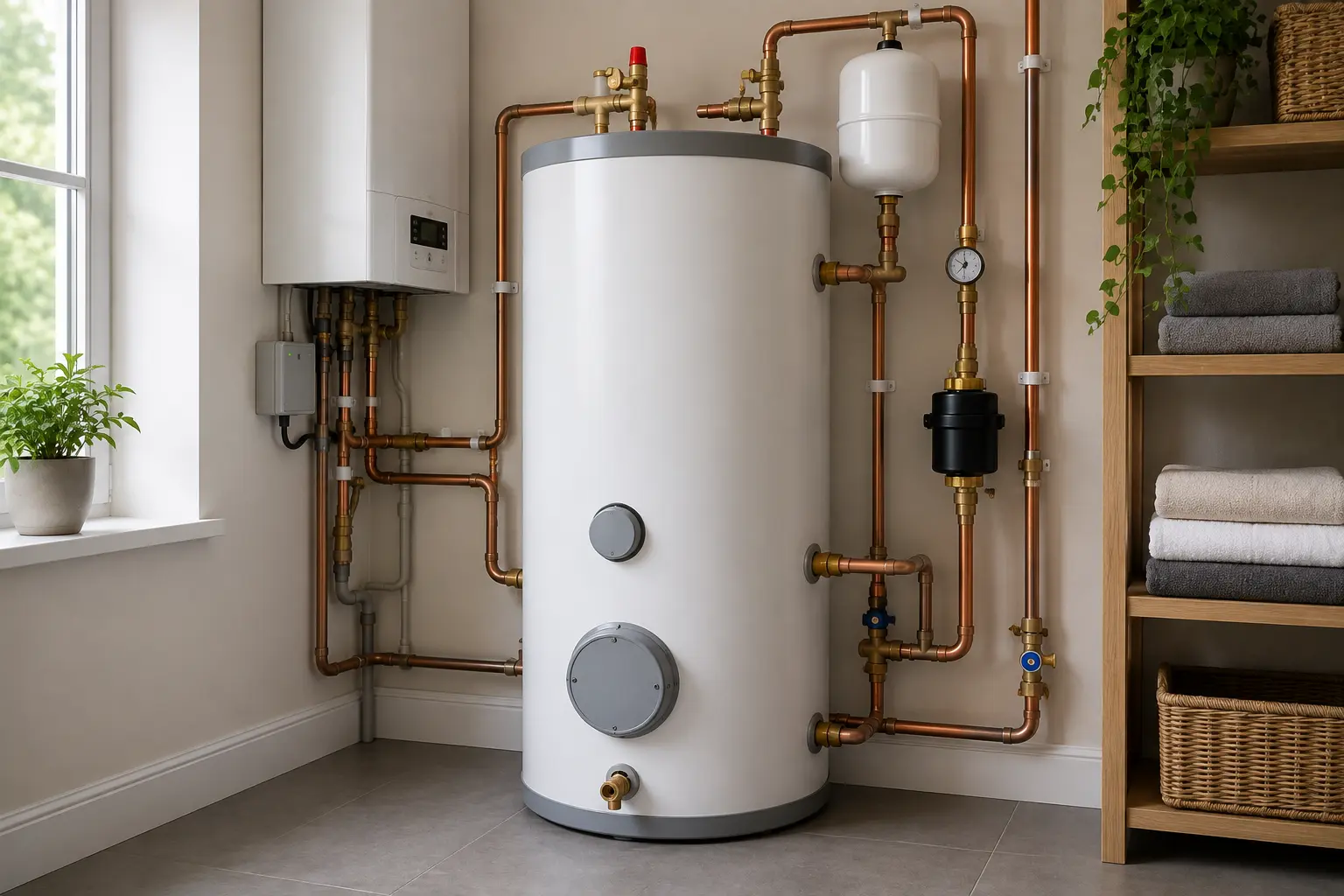
What Is an Unvented Hot Water Cylinder?
An unvented hot water cylinder stores hot water at mains pressure, rather than relying on a cold water tank in the loft. Because it’s fed directly from the mains, there’s no need for a header tank or feed cistern, and hot water comes out at the same strong pressure as your cold taps.
This is different from a traditional vented cylinder, which relies on gravity from a loft tank and can leave upstairs showers feeling weak, especially in homes with more than one bathroom.
Benefits of Getting an Unvented Hot Water Cylinder
1. Stronger, Mains-Pressure Showers
Because the cylinder is fed directly from the mains, hot water comes through at full pressure rather than gravity-fed pressure from a loft tank. This means a noticeably stronger shower, particularly useful in homes where the tank sits low or a bathroom is on the top floor.
2. No Loft Tank Needed
Unvented systems don’t need a cold water storage tank or feeder cistern in the loft. That removes a common source of loft leaks and freezing pipes in winter, and it means one less thing to maintain out of sight.
3. Frees Up Loft and Airing Cupboard Space
Without a bulky tank taking up loft space, that area becomes usable for storage or conversion. The cylinder itself is also often more compact than older vented setups, which can free up airing cupboard space too.
4. Consistent Pressure Throughout the Home
With a vented system, pressure can drop when hot water is drawn from more than one outlet at once, for example a shower running while the kitchen tap is on. An unvented cylinder maintains strong, even pressure across multiple outlets at the same time.
5. Works Well Alongside Oil and Gas System Boilers
Unvented cylinders pair naturally with a system boiler installation, and we install both oil and gas systems, so the combination suits homes both on and off the mains gas network. If you’re not sure whether a combi or system boiler is the better fit alongside a cylinder upgrade, our combi vs system boilers guide breaks down the difference.
6. A Cleaner, More Contained System
Because the cylinder is a sealed unit rather than an open, gravity-fed tank, there’s less risk of debris or contamination entering the water supply over time. Fewer open components also means fewer places for airlocks to build up.
7. Well Suited to Larger or Period Homes
Many homes across Herefordshire, including older or larger properties with multiple bathrooms, weren’t designed with strong upstairs water pressure in mind. An unvented cylinder is often the more practical fix than re-plumbing an entire gravity-fed system.
Is an Unvented Cylinder Right for Every Home?
Most homes with a reasonable incoming mains pressure and flow rate are suitable, but it’s worth having this checked before committing. Unvented cylinders also need a properly sized cylinder for your household’s hot water demand, which is something worth getting right at the planning stage rather than after installation.
Because unvented systems operate under pressure, installation and any ongoing servicing must be carried out by a competent, qualified installer rather than as a DIY job. This isn’t a system to attempt yourself, given the safety components involved in managing pressure and temperature.
Unvented Cylinder Installation Across Herefordshire
We install and service unvented hot water cylinders and system boilers for homeowners across Hereford, Bromyard, Ledbury, Leominster and Ross-on-Wye. Whether you’re dealing with weak upstairs pressure or just want to free up loft space, it’s worth getting a proper assessment of your current setup before deciding.
Frequently Asked Questions
Do I need a specific type of boiler for an unvented cylinder? No single boiler type is required, but unvented cylinders are most commonly paired with a system boiler, whether oil or gas. A combi boiler heats water on demand and doesn’t use a cylinder at all, so if you’re choosing between the two, it’s worth comparing combi vs system boilers first.
Is an unvented cylinder safe? Yes, when installed and maintained correctly by a qualified installer. Unvented cylinders include safety valves designed to manage pressure and temperature, which is why installation isn’t suitable as a DIY project.
Can an unvented cylinder go in any home? Most homes with adequate mains pressure can have one fitted, but it does depend on your incoming water supply and household hot water demand. A qualified installer can check this before you commit.
Ready to find out if an unvented hot water cylinder is right for your home? Get in touch with our plumbing team for an assessment.